

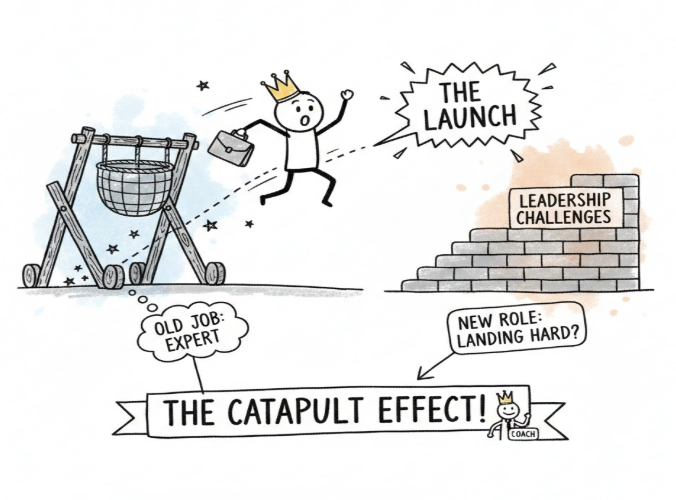
🚩 Most leaders don't land in their new roles. They're jettisoned into them.
🚩 Many current leaders NEVER had an adequate preparation for their leadership role. Never prepped for what’s on the “other side.” The term that describes their transition: “catapulted!”
Here’s a poignant quote from an Executive that echoes the perspective of so many others —

My clients often ask me about managing and coaching in difficult situations ... aka, dealing with difficult people!
Since we can’t control how others behave, and we should never, ever try, I thought it would be useful to share a few important reminders when addressing tough PEOPLE challenges.

This blog draws heavily on Stoic philosophy (Marcus Aurelius, Seneca, Epictetus) to define resilience not as simply enduring stress, but as maintaining inner stability, decency, and clarity amid external challenges.
Here are valuable insights on the importance of resilient leadership and how to cultivate it.

Coaching is an honor. The research is filled with suggestions on how to do it effectively. I thought it would be helpful to boil it down. Over the years collaborating with so many wonderful clients, I’ve identified nine critical factors that work. “Work,” being the operative word.
There MUST be…

Ever feel like traditional leadership training just … doesn't quite stick? You can read the books, listen to the lectures, but when faced with real-world challenges, you're back to square one.
That's where the power of role plays and simulation comes in. Forget the lectures! The best way to learn is by doing. Training isn't just about understanding; it's about experiencing, adapting, and ultimately, transforming.
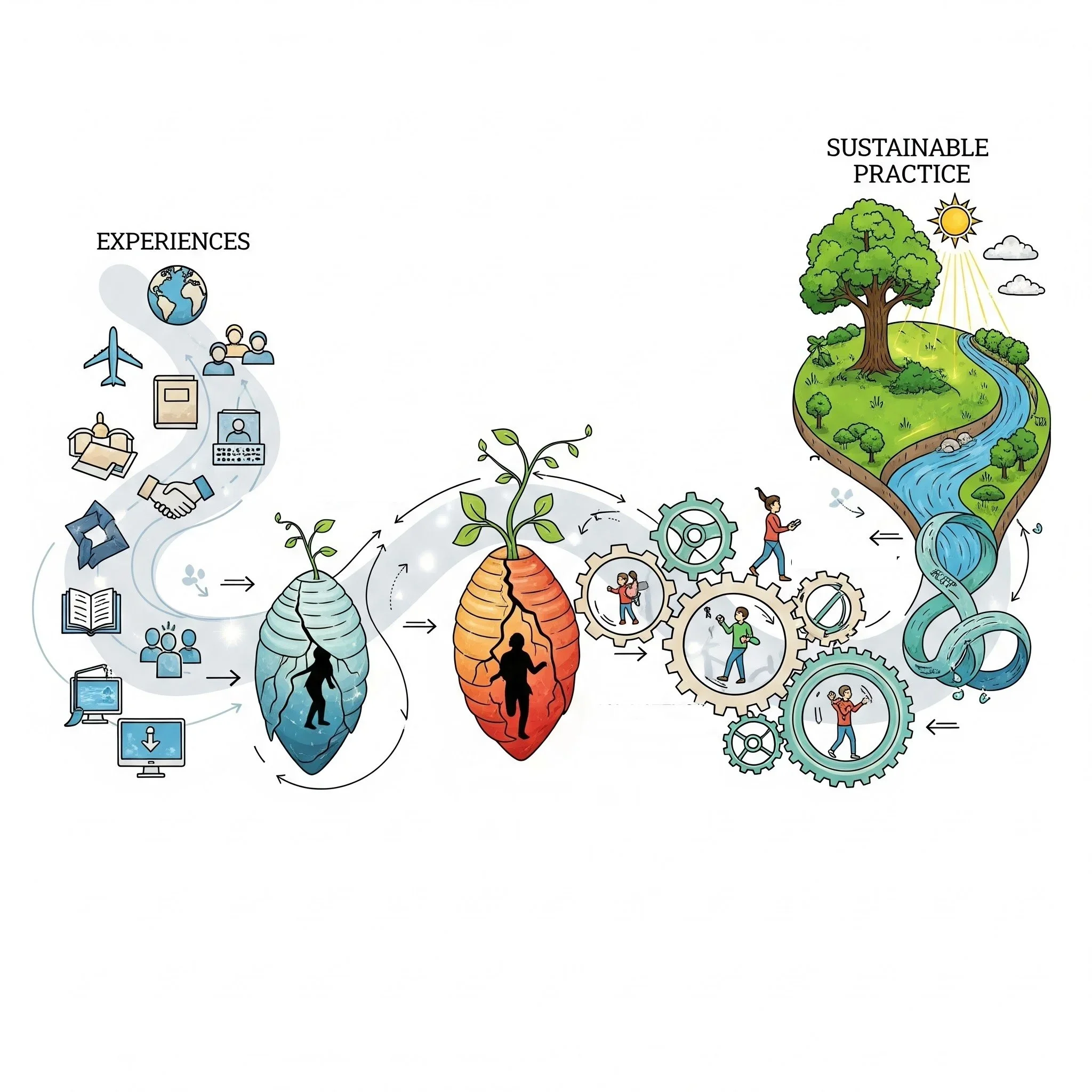
We often think of learning as acquiring a new skill. We take a course, we read a book, we learn a new piece of software, and we check the box. We've "learned" it. But how often does that new knowledge actually change the way we work, think, or lead? How often does it just sit on a mental shelf, unused, while we revert to our old, comfortable ways of doing things?
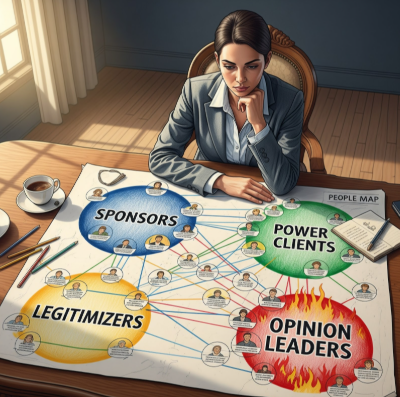
As a leader, you live and die by your ability to execute. We spend countless hours crafting project plans, Gantt charts, and strategic roadmaps. But in any complex initiative, there's another map that's equally, if not more, important:
For leaders who pride themselves on strong partnership skills, mastering the art of stakeholder mapping isn't just a "nice-to-have"—it's a core competency. It's the practice of systematically identifying, understanding, and planning how to engage with the key individuals whose support is critical for success. It's about managing the politics, building coalitions, fostering alignment, and navigating the human landscape with intention.

Feedback is the cornerstone of personal and professional growth. It’s how the world sees us. It enhances self-awareness, strengthens relationships, and keeps individuals and teams on the path to success. Yet, the process, especially when the feedback is developmental, can be fraught with anxiety for both the giver and the receiver. The key is to deliver the message in a way that it can be heard and acted upon. The art is doing so without drawing blood, losing clients, and damaging relationships.

We’ve all been in that meeting. The one that spirals into chaos, gets dominated by the loudest voice, or ends with a vague "we'll circle back" and no real progress. We often blame a weak agenda or a disengaged team, but the root cause is frequently more profound: we’re mistaking subject matter expertise for group process leadership.

For leaders, it can be easy to fall into the trap of believing that our primary role is to direct, to speak, and to have all the answers. We lead with our expertise and our passion, eager to solve problems and drive results. But what if the most powerful tool in our leadership arsenal isn't our voice, but our ears? Zeno said it over 2,000 years ago, “We have two ears, and one mouth, so… listen more than we speak.” What if the ability to truly listen is the key to unlocking the full potential of our teams, our clients, and our organizations?